

Beyond the Floor Plan
We're excited to share this blog post from our client, Dr. Chuma Chike-Obi, highlighting the award-winning 360 Plastic Surgery office designed by Britt Design Group.
Excerpt from Why Your Surgeon's Clinic Should Feel Like It Was Built for You, by Chuma Chike-Obi, MDOn Designing a Clinic Around a Philosophy, Not a Floor Plan
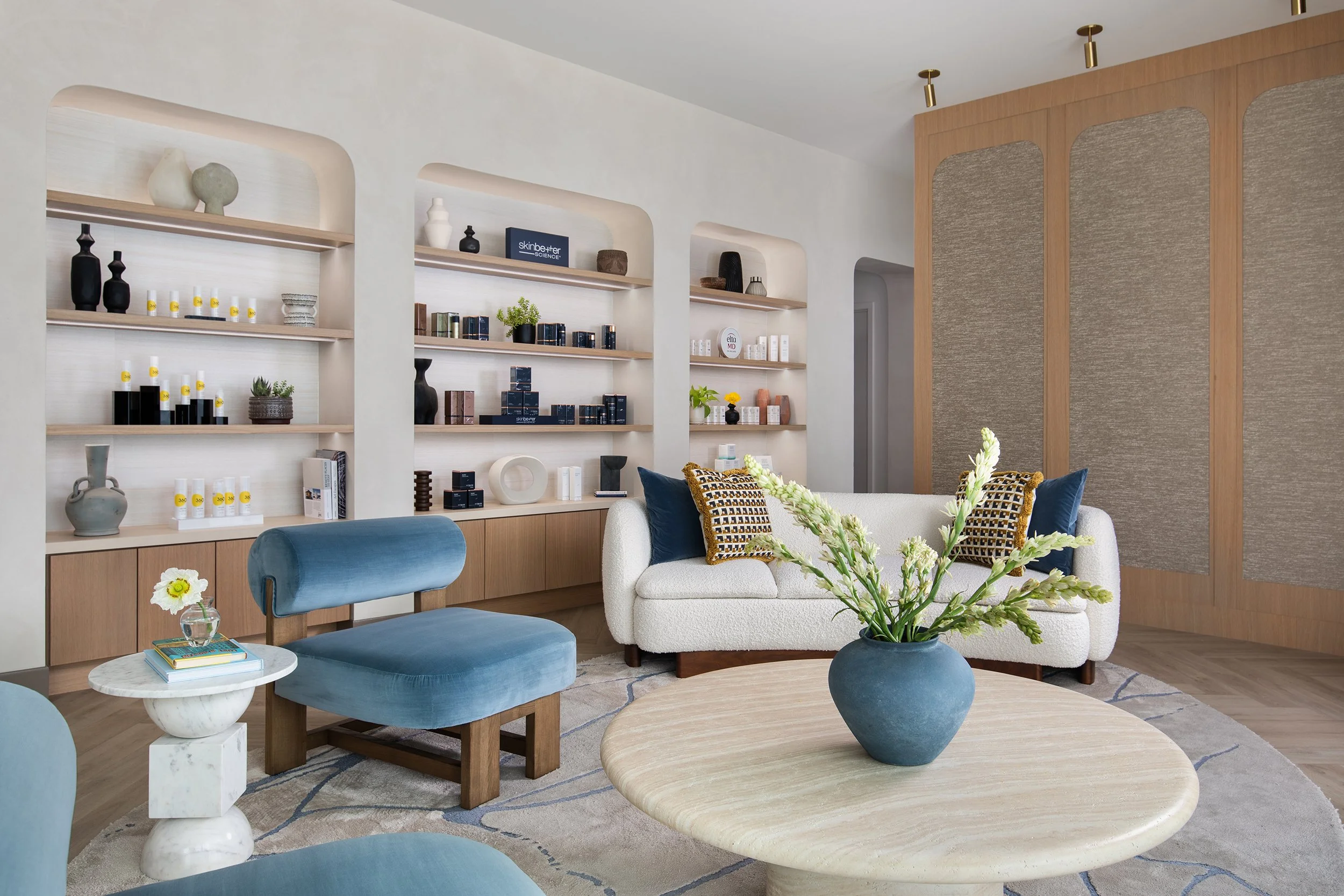
You notice it before anyone greets you. Something about the space itself. The light. The materials. The quiet. You might not be able to articulate it in the moment, but your body registers it: this place was thought about.
When we designed the 360 Plastic Surgery clinic, I did not start with square footage or equipment lists. I started with a question: “What should a patient feel in the ten seconds between walking through the door and being spoken to?”. Because those ten seconds tell the truth about a practice. They tell the patient whether this place was built around their experience or around operational convenience.
Most medical spaces are designed from the inside out — staff workflow first, patient experience as an afterthought. The result is predictable: fluorescent lighting, a reception window that feels like a bank teller, a waiting room that could be a dentist’s office or a DMV or anywhere. The space says nothing about the care that happens inside it.
We built ours from the outside in.
Space as the First Conversation
A plastic surgery consultation is one of the most personal conversations a patient will ever have with a doctor. They are talking about their body, their self-image, their vulnerabilities. That conversation deserves a setting that signals safety, intention, and quality before a single word is exchanged.
The space is the first argument the practice makes about what kind of care happens here.
This is not about luxury for the sake of luxury. It is about alignment. If the practice philosophy says we treat every patient as a whole person — not a body part in isolation — then every touchpoint should reflect that. The consultation room. The hallway. The lighting. The materials. The distance between you and the next patient. All of it either reinforces the philosophy or contradicts it.
Our design team at Britt Design Group understood this distinction from the first meeting.
What a Clinic Communicates Without Saying Anything
Patients are remarkably perceptive, even when they are not consciously evaluating the space. Research in environmental psychology consistently shows that physical environments shape trust, anxiety levels, and perceived quality of care. A patient who feels calm and respected in the waiting room enters the consultation with a different physiological state than one who has been sitting under fluorescent tubes watching a muted television.
Here is what design choices actually communicate:
Natural light and warm materials say: We considered your comfort, not just our budget.
Acoustic privacy says: Your conversation will not be overheard.
Thoughtful transitions between spaces say: We respect the journey you are on, not just the destination.
Absence of clutter and visual noise says: We are focused. We are organized. We are in control.
None of this is about impressing anyone. A trophy case in the lobby is about the surgeon. A well-designed consultation room is about the patient. The difference is everything.
When the Design Community Noticed
Earlier this year, 360 Plastic Surgery was awarded First Place in the Commercial: Healthcare – Small category at the ASID Design Excellence Awards, which recognize the finest interior design achievements by professionals within the Austin design community of the Texas Chapter of the American Society of Interior Designers. It also won Second Place in the same category at the Texas-wide ASID Celebrating Design Texas Awards.
I share this not as a credential but as a confirmation. The design professionals who evaluate healthcare spaces for a living looked at our clinic and recognized that something different was happening. That recognition validates what our patients have been telling us since we opened: this place feels different.
The credit belongs to the Britt Design Group team, who took a philosophy — that the space is part of the care — and turned it into walls, light, and texture. They designed a clinic that serves the mission rather than decorating a medical office.
What This Means for You
If you are considering plastic surgery or aesthetic treatments, you will spend time in many consultation rooms. You will sit in many waiting areas. Pay attention to how each one makes you feel. Not what is on the walls — how the space itself speaks to you.
A practice that was thoughtful about the space was probably thoughtful about everything else: the surgical plan, the recovery protocol, the follow-up process, the way the team communicates. Design is not separate from clinical quality. It is a reflection of it.
We designed our flagship 360 Plastic Surgery clinic to feel like a place of care. Not a medical facility. Not a spa. Not a retail store. A place where someone who is making an important decision about their body can sit in a room that says: We built this for you. A practice that was thoughtful about the space was probably thoughtful about everything else.