

Designing for How We Live
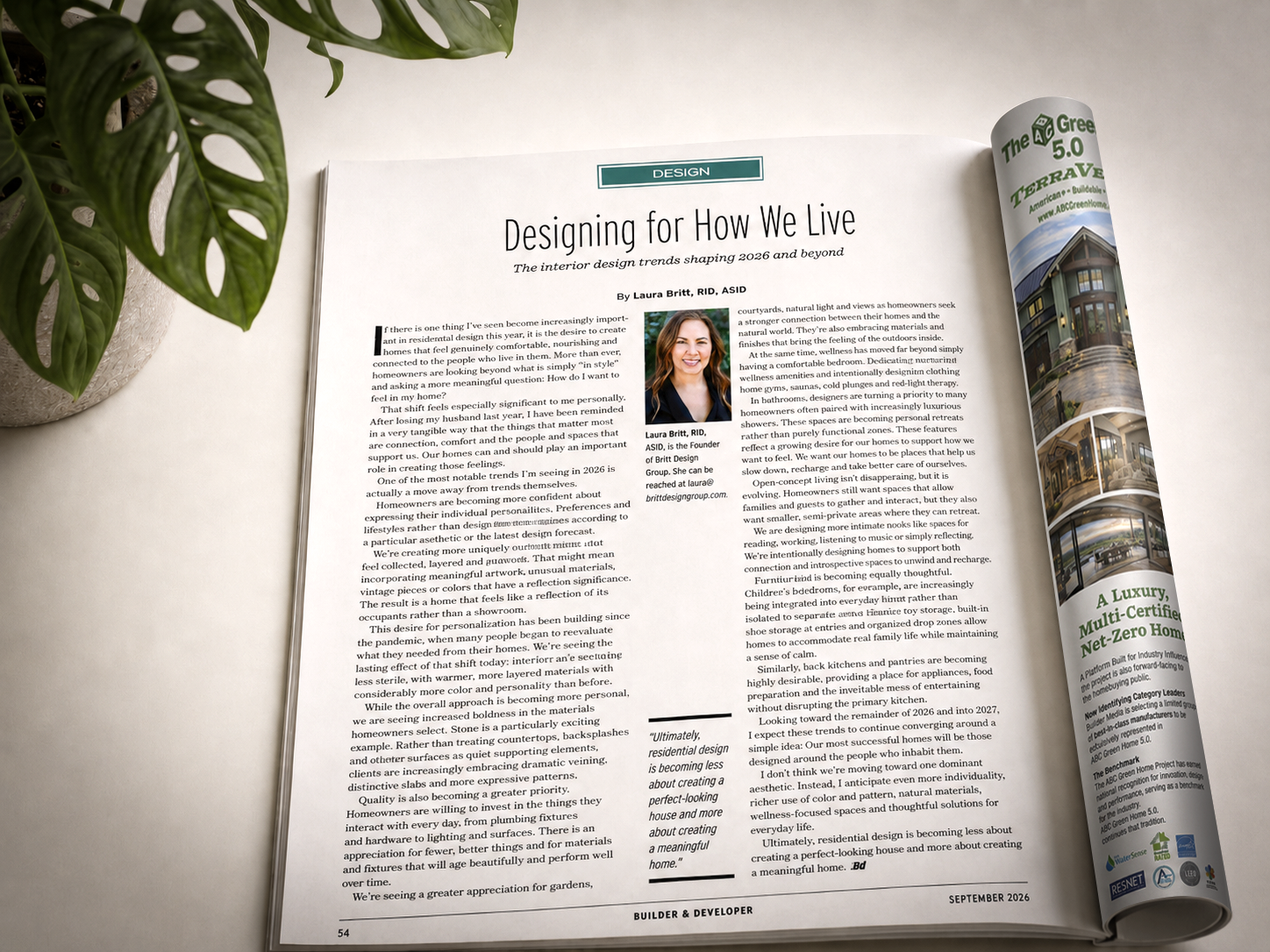
In the September 2026 issue of Builder and Developer magazine, Laura Britt shares her take on the residential design trends shaping 2026 and what she sees carrying into 2027.
From a growing focus on wellness and natural materials to a renewed appreciation for craftsmanship and more flexible ways of living, Laura looks at how homeowners’ priorities are continuing to shape the way we design.
If there is one thing I've seen become increasingly important in residential design this year, it is the desire to create homes that feel genuinely comfortable, nourishing and connected to the people who live in them. More than ever, homeowners are looking beyond what is simply "in style” and asking a more meaningful question: How do I want to feel in my home?
That shift feels especially significant to me personally. After losing my husband last year, I have been reminded in a very tangible way that the things that matter most are connection, comfort and the people and spaces that support us. Our homes can and should play an important role in creating those feelings.
One of the most notable trends I'm seeing in 2026 is actually a move away from trends themselves.
Homeowners are becoming more confident about expressing their individual personalities, preferences and lifestyles rather than designing their homes according to a particular aesthetic or the latest design forecast.
We're creating more uniquely curated spaces that feel collected, layered and personal. That might mean incorporating meaningful artwork, unusual materials, vintage pieces or colors that have a personal significance. The result is a home that feels like a reflection of its occupants rather than a showroom.
This desire for personalization has been building since the pandemic, when many people began to reevaluate what lhey needed from their homes. We're seeing the lasting effect of that shift today. Interiors are becoming less sterile with warmer, more layered materials with considerably more color and personality than before.
While the overall approach is becoming more personal, we are seeing increased boldness in the materials homeowners select. Stone is a particularly exciting example. Rather than treating counterlops, backsplashes and shower surfaces as quiet supporting elements, clients are increasingly embrasing dramatic veining, distinctive slabs and more expressive patterns.
Quality is also becoming a greater priority. Homeowners are willing to invest in the things they interact with every day, from plumbing fixtures and hardware to lighting and surfaces. There is an appreciation for fewer, better things and for materials and fixtures that will age beautifully and perform well over time.
"Ultimately, residential design is becoming less about creating a perfect-looking house and more about creating a meaningful home."
We're seeing a greater appreciation for gardens, courtyards, natural light and views as homeowners seek a stronger connection between their home, and the natural world. They're also embracing materials and finishes that bring the feeling of the outdoors inside.
At the same time, wellness has moved far beyond simply having a comfortable bedroom. Dedicated or integrated wellness amenities are increasingly desirable, including home gyms, saunas, cold plunges and red-light therapy.
In bathrooms, soaking lubs remain a priority for many homeowners, often paired with increasingly luxurious showers. These spaces are becoming personal retreats rather thao purely functional rooms. These features reflect a growing desire for our homes to support bow we want to feel. We want our homes to be places that help us slow down, recharge and take better care of ourselves.
Open-concept living isn't disappearing, but it is evolving. Homeowners still want spaces that allow families and guests lo gather and interact, but they also want srnaller, semi-private areas where they can retreat.
We are designing more intimate nooks like spaces for reading, working, listening to music or simply reflecting. We're intentionally designing homes to support both connection and introspective spaces to unwind and recharge.
Functionality is becoming equally thoughtful. Children's belongings, for example, are increasingly being integrated into everyday living rather than relegated to seperate areas. Hidden toy storage, built-in shoe storage at entries and organized drop zones allow homes to accommodate real family life while maintaining a sense of calm.
Similarly, back kitchens and pantries are becoming highly desirable, providing a place for appliances, food preparation and the inevitable mess of entertaining without disrupting the primary kitchen.
Looking toward the remainder of 2026 and into 2027, I expect these trends to continue converging around a single idea: The most successful homes will be those designed around the people who inhabit them.
I don't think we're moving toward one dominant aesthetic. Instead, I anticipate even more individuality, richer use of color and pattern, natural materials, wellness-focused spaces and thoughtful solutions for everyday life.
Ultimately, residential design is becoming less about creating a perfect-looking house and more about creating a meaningful home.